Miyoo Mini Plus vs R36S vs Anbernic: Full Retro Handheld Comparison
The retro handheld gaming market has exploded in recent years, with devices like the Miyoo Mini Plus, R36S, and various Anbernic handheld consoles leading the space.
For buyers searching for a portable retro gaming console, the options can be confusing. Each device looks similar on the surface, but the performance, software experience, and overall usability can be very different.
This guide breaks down the key differences so you can decide which retro handheld is worth your money in 2026.

1. Quick Overview of Each Device
🎮 Miyoo Mini Plus
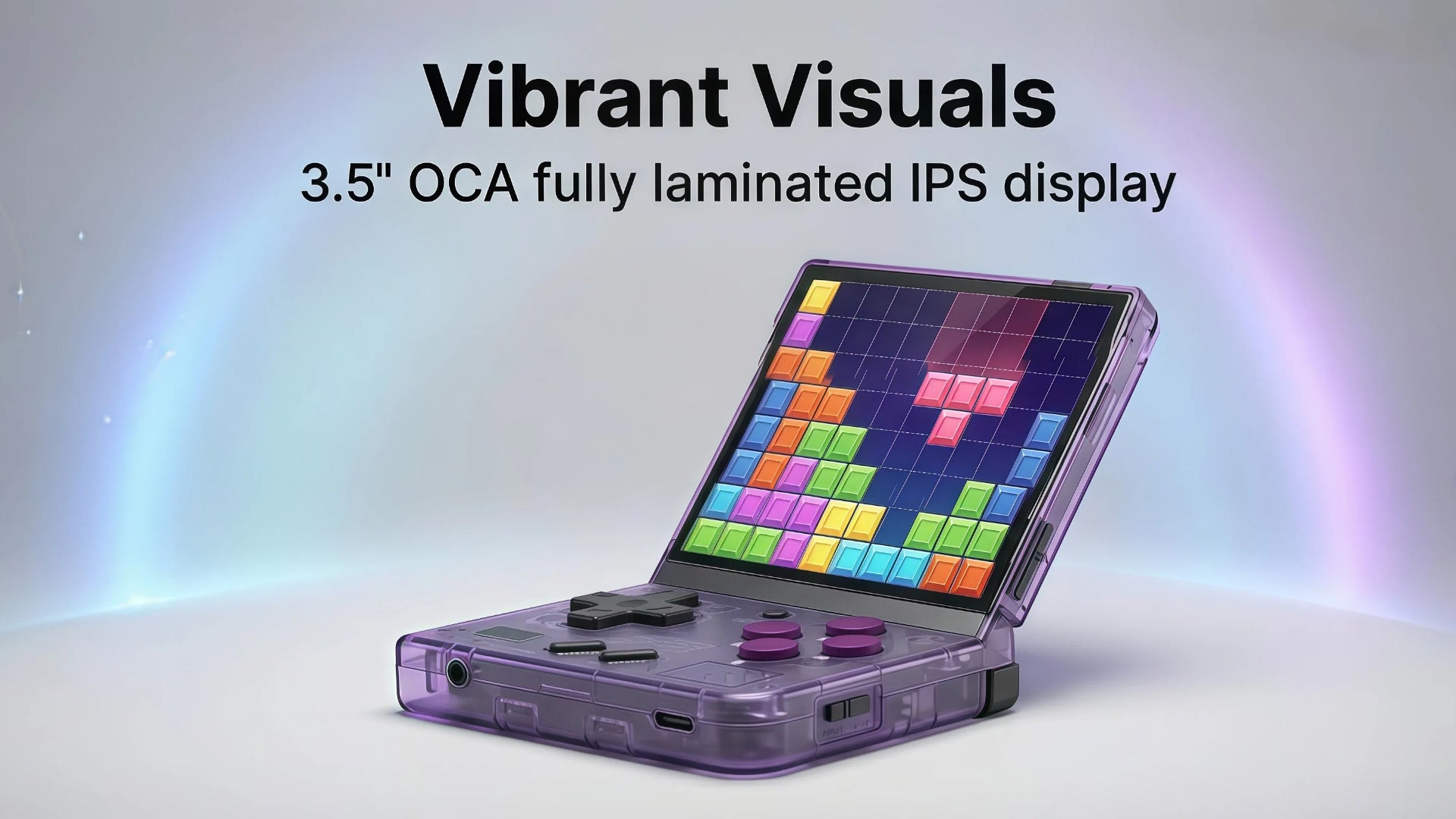
The Miyoo Mini Plus is one of the most popular compact retro handhelds. It focuses on simplicity, portability, and strong community support through Onion OS.
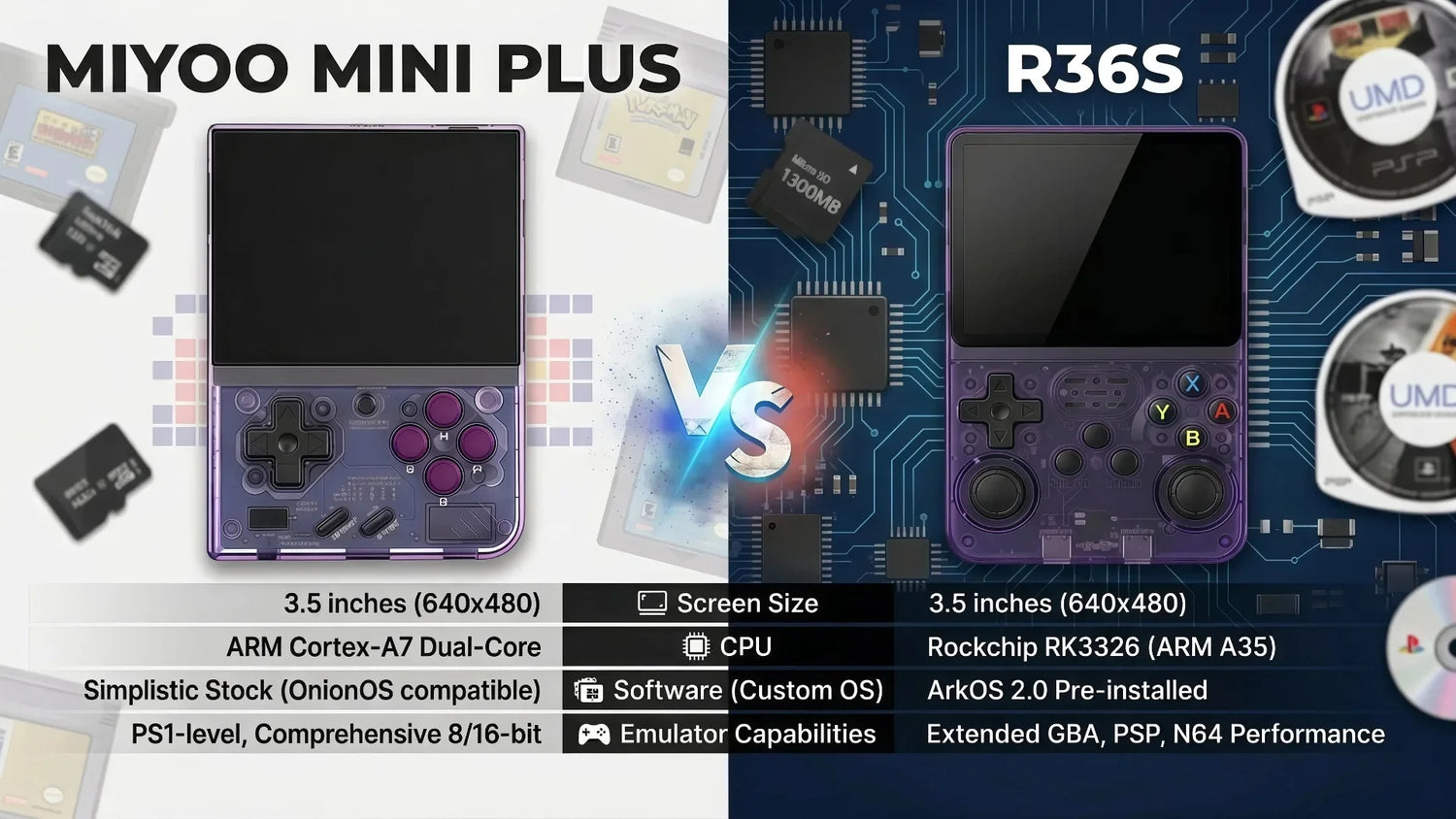
- 3.5” IPS display (640×480)
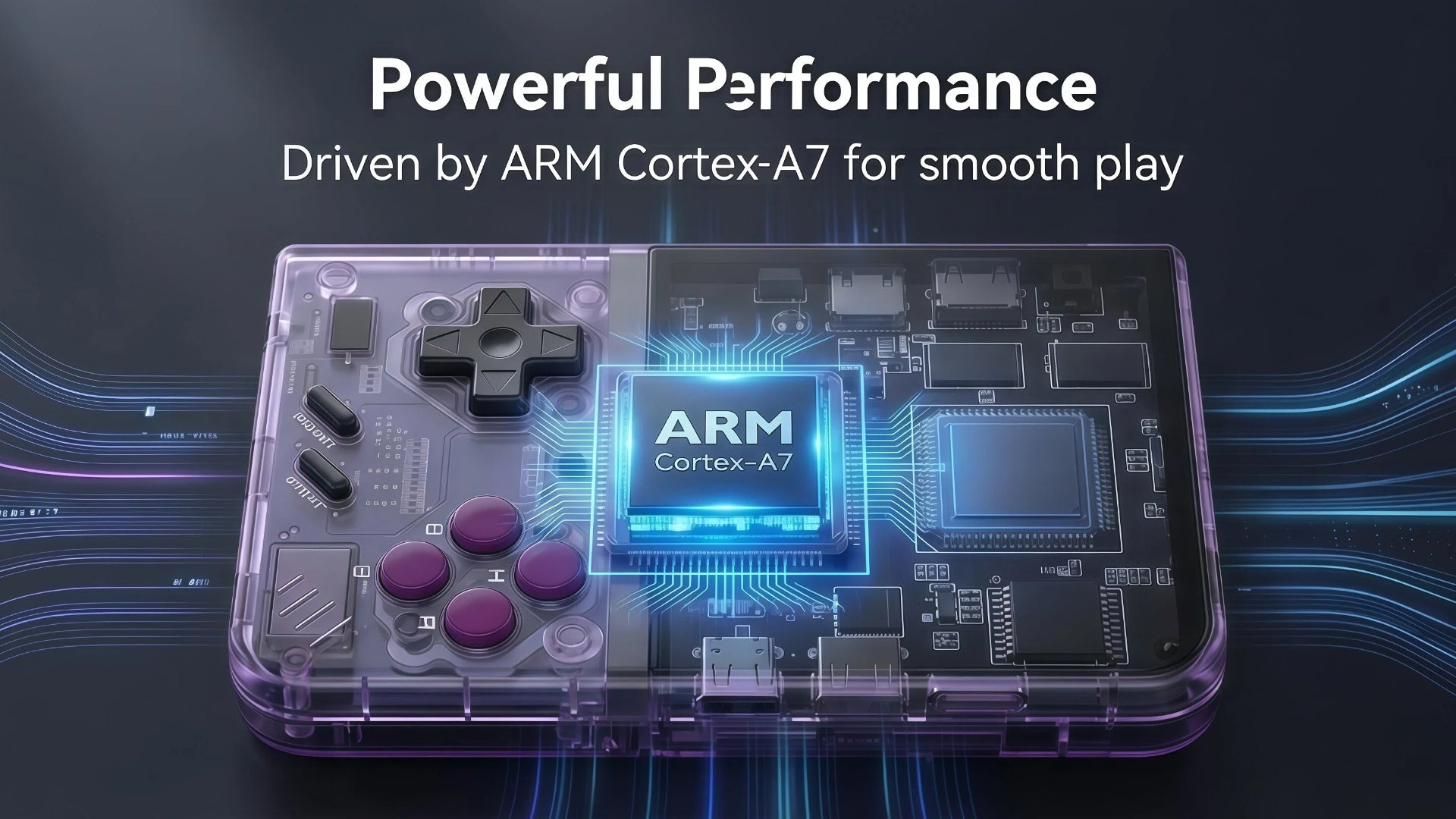
- Linux-based system
- Onion OS support
- WiFi multiplayer
- Strong retro UI experience
- Ultra-portable design
It is widely considered the most “refined” entry-level retro handheld.
🎮 R36S
The R36S retro handheld is a budget-friendly device that focuses heavily on performance per dollar.
- 3.5” IPS display
- Linux-based system (ArkOS / EmuELEC variants)
- Strong emulator support
- Larger storage flexibility
- More hardware-focused than UI-focused
It is popular among users who want maximum specs at a low price.
🎮 Anbernic Series (e.g. RG35XX / RG353 / RG405)
The Anbernic handheld consoles represent a more premium and diversified ecosystem.
- Multiple models (vertical & horizontal)
- Higher build quality
- Better buttons & ergonomics
- Some models support Android
- Strong emulator performance across tiers
Anbernic is often considered the “premium mainstream” option.

2. Performance Comparison
Miyoo Mini Plus Performance
The Miyoo Mini Plus is optimized for 8-bit and 16-bit systems. It runs:
- NES / SNES smoothly
- GBA with excellent stability
- PS1 with good performance
It is not designed for heavy 3D emulation, but it is extremely stable for classic gaming.
R36S Performance
The R36S often uses slightly stronger hardware configurations depending on version.
- Better performance in some PS1 titles
- Slight advantage in heavier retro systems
- More flexible OS options
However, software optimization is less polished compared to Miyoo.
Anbernic Performance
Anbernic devices vary by model:
- Entry models ≈ Miyoo performance
- Mid-tier models ≈ better PS1 + PSP support
- Higher-end models ≈ Android gaming + N64/PSP improvements
Anbernic clearly wins in raw performance range.
3. Software & User Experience
Miyoo Mini Plus (Onion OS Advantage)
The biggest strength of Miyoo Mini Plus is its software ecosystem.
With Onion OS:
- Clean UI
- Fast boot time
- Easy game navigation
- Stable save/load system
- Highly polished experience
It feels “finished” even on a budget device.
R36S Software Experience
R36S is more technical:
- Multiple firmware options
- Less consistent UI
- Requires more setup knowledge
- Powerful but less beginner-friendly
It is better for tinkerers than casual users.
Anbernic Software Experience
Anbernic sits in the middle:
- More polished than R36S
- Less refined than Miyoo Onion OS
- Android models offer flexibility
- Some learning curve depending on model
4. Build Quality & Design
Miyoo Mini Plus
- Lightweight plastic build
- Extremely portable
- Pocket-friendly design
- Simple button layout
Best for portability, not premium feel.
R36S
- Slightly bulkier depending on version
- Functional build quality
- Not as refined ergonomically
Focus is more on cost-performance.
Anbernic
- Best build quality overall
- Better buttons and D-pad
- More ergonomic designs
- Premium feel across most models
Winner in physical design.
5. Battery Life Comparison
- Miyoo Mini Plus: ~5–6 hours
- R36S: ~5–7 hours (varies by firmware)
- Anbernic: ~6–10 hours (model dependent)
Anbernic generally wins, but Miyoo is consistent and efficient.
6. Multiplayer & Connectivity
- Miyoo Mini Plus: WiFi multiplayer + updates
- R36S: Limited or inconsistent WiFi features
- Anbernic: Some models support WiFi, Bluetooth, online features
Miyoo stands out in simplicity and usability for multiplayer retro gaming.
7. Price vs Value
Miyoo Mini Plus
Best for:
- Beginners
- Casual retro gaming
- Users who want simplicity
💡 Best “plug-and-play” experience
R36S
Best for:
- Budget buyers
- Hardware enthusiasts
- Users who don’t mind setup
💡 Best raw value per dollar
Anbernic
Best for:
- Serious collectors
- Performance seekers
- Long-term users
💡 Best overall ecosystem
8. Which One Should You Buy?
Choose Miyoo Mini Plus if:
- You want the easiest experience
- You care about portability
- You want polished UI (Onion OS)
- You mainly play retro 2D games
👉 Best “everyday retro handheld”
Choose R36S if:
- You want the cheapest option
- You like tweaking systems
- You want decent performance at low cost
👉 Best budget performance choice
Choose Anbernic if:
- You want the best hardware quality
- You want broader emulator support
- You want long-term upgrade flexibility
👉 Best overall premium retro handheld ecosystem

Final Verdict
The comparison between Miyoo Mini Plus vs R36S vs Anbernic is not about which is universally best—it’s about user type.
- Miyoo Mini Plus → best simplicity + portability
- R36S → best budget performance
- Anbernic → best premium experience
If your focus is pure retro gaming without complexity, the Miyoo Mini Plus remains one of the strongest choices in 2026, especially for users entering the retro handheld world for the first time.